Higher education marketing is changing.
In fact, the NCES report highlights that enrollment numbers have fluctuated over the past decade, intensifying the need to spend every marketing dollar wisely.
With shifting demographics, limited budgets, and more competition, colleges and universities behave more like DTC brands.
Also, prospective students now expect universities to provide the same level of personalization and engagement they experience in purchasing decisions.
Moreover, a study conducted by UPCEA and Search Influence establishes a nationwide benchmark for cost per inquiry (CPI) at approximately $140 for online and professional education programs.
Therefore, higher Ed leaders are rethinking their college marketing budget strategies to figure out what works best and where they can cut back.
In this post, we will explore higher Ed marketing budget, key strategies for allocation, different ways to optimize the budget, and address challenges to generate maximum ROI, along with future trends.
Here are five key takeaways for optimizing higher education marketing budgets:
- Data-Driven Decision Making: Utilize analytics to track metrics like Cost Per Inquiry (CPI) and cost per enrolled student, ensuring informed decisions that enhance return on investment (ROI).
- Strategic Budget Allocation: Align marketing budgets with enrollment goals and analyze past campaign performances to direct resources toward the most effective channels
- Continuous Optimization: Regularly evaluate and refine marketing strategies to adapt to changing market conditions and student behaviors, maintaining campaign effectiveness.
- Embracing Innovative Technologies: Incorporate advanced technologies like artificial intelligence (AI) and virtual reality (VR) to enhance student engagement and differentiate the institution in a competitive market.
- Collaboration and Stakeholder Engagement: Engage with key stakeholders, including CFOs and faculty, to ensure marketing strategies align with institutional goals and resources are allocated effectively.
Understanding the Higher Ed Marketing Budget
A higher education marketing budget is the financial plan universities and colleges set aside to promote their institution.
It covers all costs associated with reaching and engaging prospective students, helping to boost enrollment and support institutional marketing goals.
The key components of the higher education marketing budget are:
- Digital Marketing: Investments in online advertising, social media campaigns, search engine optimization (SEO), email marketing, and content creation to reach students where they spend most of their time.
- Traditional Advertising: Spending on print ads, radio, television, and outdoor billboards. Although digital channels are growing, many institutions still rely on traditional media to build brand awareness.
- Events: Costs related to organizing campus tours, open houses, college fairs, webinars, and other events that create face-to-face or virtual interactions with prospective students.
- Student Outreach: Funding for direct communication initiatives, such as targeted mailings, phone campaigns, and personalized follow-ups with potential applicants.
That said, strategic resource allocation and expense categorization in areas that drive the best results and reduce costs are necessary.
To improve an institution’s visibility and convert inquiries into enrollments, it is essential to track expenses against key performance metrics and make data-driven strategies for long-term growth.
9 Key Strategies for Marketing Budget Allocation
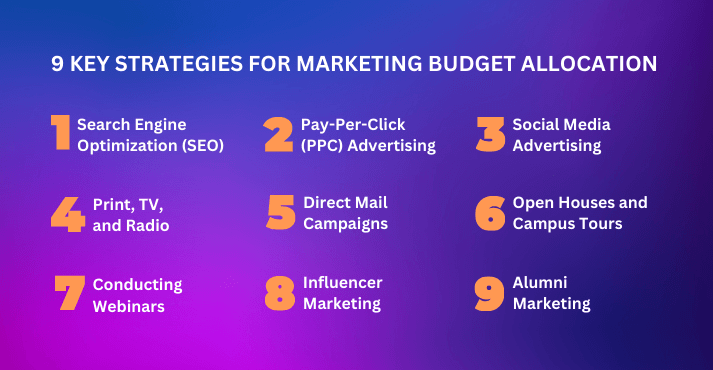
According to the CMO Survey by Deloitte and the American Marketing Association, companies allocate an average of 53.8% of their marketing budgets to digital efforts, while institutions in higher education spend as much as 75.5% on digital marketing initiatives.
To maximize the return on this investment, universities should consider a diversified approach that includes various marketing strategies:
1. Search Engine Optimization (SEO)
With 68% of online experiences starting on a search engine, having a well-optimized school website is important for attracting prospective students.
Moreover, Google dominates the search market, with a 95.32% share on mobile and 81.95% on desktop. Therefore, universities need to rank higher in search results.
To increase organic traffic, institutions must invest in effective SEO strategies, whether by building an in-house team or partnering with an experienced higher education SEO agency.
Therefore, you must allocate a budget for SEO to achieve a strong search presence, greater visibility, and student inquiries.
2. Pay-Per-Click (PPC) Advertising
Based on Statista, pay-per-click (PPC) marketers, Google (98%), Facebook (76%), and Instagram (70%) are the most widely used advertising platforms.
That said, investing in targeted online ads ensures that promotional content reaches specific demographics that are actively searching for educational opportunities.
3. Social Media Advertising
Internet users spend an average of 143 minutes daily on social media platforms.
In addition, daily image-sharing statistics reveal that WhatsApp users share 6.9 billion photos, Snapchat users share 3.8 billion, Facebook users share 2.1 billion, and Instagram users share 1.3 billion images.
Given this engagement, higher education institutions should prioritize a digital-first marketing approach and allocate significant portions of their budgets to online strategies.
4. Print, TV, and Radio
According to the Pew Research Center, the 33% of Americans who frequently obtain news from television has remained relatively stable.
Conversely, reliance on print media has declined. Only 26% of U.S. adults report reading print publications for news often or sometimes, the lowest percentage recorded in recent surveys.
While traditional marketing methods like television and print advertising may still hold value for certain demographics, their declining influence suggests that institutions should critically assess the return on investment for these channels.
5. Direct Mail Campaigns
Email marketing has maintained its strong stance over the years, with personalized direct mail campaigns reaching prospective students, particularly in specific regions or demographics.
That said, Statista reports that the number of e-mail users globally will reach 4.89 billion in 2027, proving that email is still relevant and has plenty of potential as a marketing channel.
Given this, email's direct nature allows marketers to connect with prospective students on a personal level, create stronger relationships, and encourage enrollments.
6. Open Houses and Campus Tours
As prospective students approach the final decision, scheduling an additional visit to their top choice schools can also be helpful.
Therefore, hosting events such as open houses and campus tours allows prospective students to experience campus life firsthand, establishes personal connections, and can significantly influence enrollment decisions.
7. Webinars
Statistics show that while the average cost per lead for webinars is around $72, traditional channels like trade shows often exceed $800, resulting in a much better ROI for webinars.
That said, webinars are low-cost and generate engagement. Therefore, virtual events are essential marketing tools for increasing your numbers and advancing your mission.
8. Influencer Marketing
Influencers create authentic content that resonates with their followers, and when their audiences share similar experiences, it boosts the brand’s appeal.
A recent S&P survey supports this by revealing that 62% of people believe user-generated content (UGC) makes a brand appear more genuine, a key factor in telling an authentic brand story.
Therefore, promoting a college or university through trusted influencers among prospective students and institutions will drive authentic connections.
9. Alumni Marketing
Allocating a budget for alumni marketing is essential because personal narratives, testimonials, and success stories create a powerful emotional connection with prospective students.
People are naturally drawn to real-life experiences, making alumni stories an effective way to showcase achievements and the long-term value of a university’s education.
Therefore, a well-optimized campaign featuring alumni testimonials on digital platforms, events, and promotional materials can significantly influence decision-making.
Optimizing Marketing Budget for Maximum ROI
Every dollar spent strategically drives measurable results.
Thus, colleges and universities must optimize the marketing budget by fine-tuning the budget, reducing extra spending, and utilizing funds toward the most effective strategies to increase efficiency.
Also, a well-optimized budget enables data-driven decision-making, allowing institutions to monitor key performance indicators, adjust strategies, and boost return on investment (ROI.
To maximize marketing ROI, universities can implement several key tactics, including:
1. Leveraging Data Analytics to Track Campaign Performance
Data analytics tools such as Google Analytics, HubSpot, or Tableau enable institutions to monitor every aspect of their marketing campaigns in real-time.
With metrics like cost per inquiry, click-through rates, and conversion rates, universities can identify which channels and messages drive the best results.
This insight allows for decision-making; budgets can be reallocated from underperforming channels to those with proven success, lowering costs and boosting ROI.
2. Personalizing Content Marketing to Attract and Convert Students
Personalized content speaks directly to the unique needs and interests of prospective students.
For this, universities can create targeted content, ranging from tailored email campaigns to personalized website experiences that resonate on a deeper level.
As a result, the content is more relevant and memorable, which drives higher enrollment rates and improves ROI.
3. Utilizing Automation and AI for Efficiency
Automation and artificial intelligence streamline marketing processes by reducing manual work and ensuring that campaigns are optimized in real-time.
AI-powered tools can automatically adjust ad bids, optimize email send times, and even predict trends, allowing for more efficient budget allocation.
This results in more cost-effective campaigns, as the technology helps minimize wasted spend and maximizes the impact of every dollar invested.
4. Exploring Cost-Effective Channels Like Organic Content and Community Outreach
Focusing on organic channels, such as SEO-driven content and community outreach initiatives, provides a low-cost way to engage prospective students.
Whereas community outreach enables institutions to build trust without relying heavily on paid media.
This strategy reduces marketing expenses and complements digital campaigns, contributing to a balanced approach that enhances long-term ROI.
Common Challenges in Higher Ed Marketing Budgeting
Higher education institutions face more than enough challenges when it comes to marketing.
Unlike corporations, where departments work together toward shared objectives, colleges and universities often face challenges with siloed departments and misaligned priorities.
Another major issue is inefficient ad spending. Many universities distribute their marketing budgets without a clear strategy, often overlooking ROI and long-term impact.
Additionally, justifying marketing expenses to leadership can be challenging, especially when the results aren't immediately visible.
In fact, only a small portion of higher education marketing budgets is dedicated to research and strategic planning, further limiting the effectiveness of campaigns.
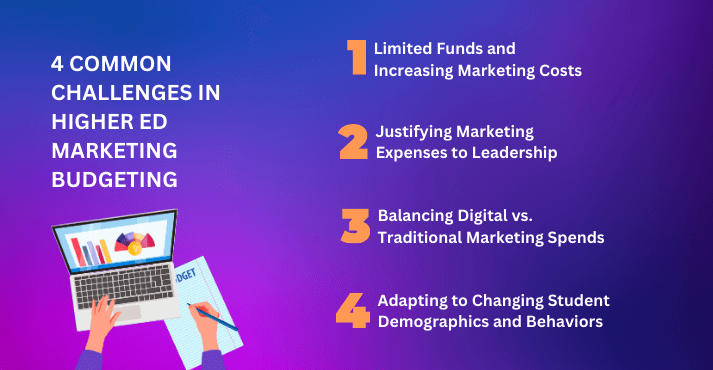
Here are some of the major budgeting challenges in higher education and why they matter:
1. Limited Funds and Increasing Marketing Costs
Many colleges and universities face strict budget constraints while the costs for marketing services keep rising.
This means institutions must find creative ways to do more with less, ensuring that every dollar spent delivers the best possible results.
For example, promote user-generated content and encourage current students, alumni, and faculty to share messages with prospective students.
2. Justifying Marketing Expenses to Leadership
School leaders often want to see immediate, clear results from investments.
It can be challenging to explain the long-term benefits of marketing, like increased enrollment and improved brand reputation, especially when these results aren’t instantly visible.
For that, marketers need to use data such as campaign ROI, leads generated, and students enrolled to prove that marketing is a wise investment.
3. Balancing Digital vs. Traditional Marketing Spends
While digital marketing methods (like social media, SEO, and PPC) tend to be cost-effective and provide measurable results, traditional methods (such as TV, print, and radio) still reach some audiences.
Therefore, finding the right mix is important to ensure that the marketing budget is distributed across channels to reach all target audiences without overspending on one side.
4. Adapting to Changing Student Demographics and Behaviors
Student interests and behaviors are constantly evolving.
As prospective students use different channels and expect more personalized communication, universities must continuously update their strategies.
This requires flexibility in budgeting and regular reassessment of which marketing tactics are working best, ensuring the institution remains competitive in a changing market.
Despite these challenges, universities with limited marketing budgets can still compete successfully by leveraging omnichannel digital marketing strategies.
With strategic planning and the right tools, higher education administrators can maximize their budget while achieving meaningful results.
Future Trends in Higher Ed Marketing Budgeting
Gen Z, in particular, has influenced how higher education institutions approach their marketing budgeting.
This tech-savvy generation values personalized, authentic, and socially conscious content, prompting institutions to rethink their marketing strategies.
Given this, here are the key future trends in higher Ed marketing budgeting for 2025:
1. AI and Automation for Better Marketing Efficiency
AI and automation help universities streamline routine tasks, analyze large volumes of campaign data in real-time, and make smarter budget decisions.
This approach not only reduces manual work but also optimizes ad spend by automatically adjusting bids and targeting based on performance metrics.
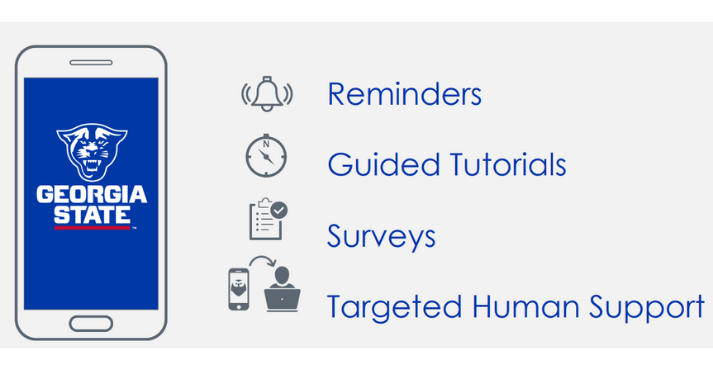
Source: GSU
For example, Georgia State University has integrated AI-powered chatbots on its websites to provide immediate, personalized responses to prospective student inquiries. This ensures that no lead is lost while keeping costs in check.
2. VR/AR Experiences for Immersive Student Engagement
Virtual and augmented reality technologies offer a powerful way to engage prospective students by allowing them to experience the campus environment virtually.
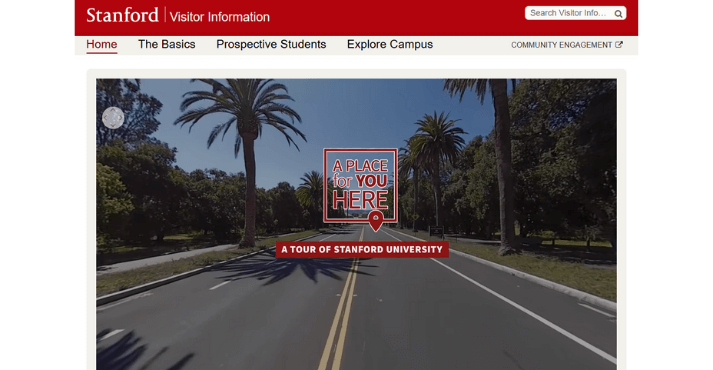
Source: Stanford University
For example, Stanford University offers an immersive virtual tour, allowing prospective students to explore the campus through a 360° guided video and an interactive self-guided walk.
This digital experience provides a glimpse into Stanford’s vibrant community, making it easier for students to connect with the university from anywhere.
3. Data-Driven Personalization in Content and Outreach
With insights from data, institutions can tailor emails, website content, and social media posts to resonate with specific segments of prospective students.
For example, a college might use its CRM to send personalized email campaigns that highlight programs that match a student's interests and location. This would result in higher conversion rates and more efficient use of the marketing budget.
4. Sustainability and Ethical Marketing as Key Decision Drivers
As students increasingly look for institutions that share their values, sustainability and ethical practices are becoming central to marketing strategies.
Universities that emphasize green initiatives, ethical research, and community engagement not only build trust but also differentiate themselves in a crowded market.
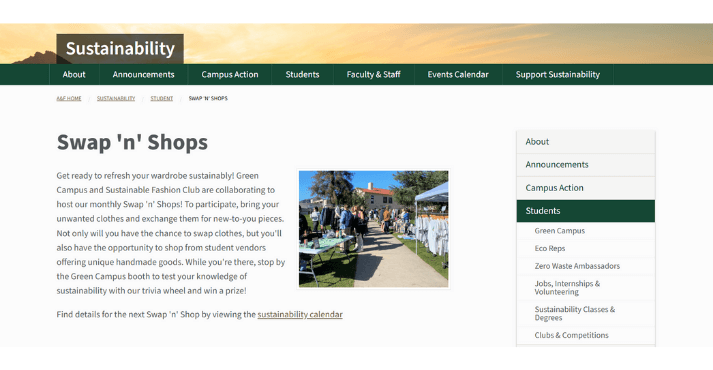
Source: Cal Poly
For example, the Green Campus initiative and Sustainable Fashion Club at Cal Poly University collaborate on a monthly "Swap 'n' Shops" event.
At this event, students are invited to bring their gently used clothes to exchange for pre-loved pieces, refreshing their wardrobe in an eco-friendly way.
Conclusion
With rising competition and evolving student expectations, universities must carefully plan their marketing budgets to maximize ROI.
For that, using data-driven decisions, tracking key performance indicators, and finding channels that resonate with prospective students can quickly help higher Ed marketers identify what’s working and where adjustments are needed.
Moreover, continuous optimization ensures that marketing efforts remain effective despite changing market conditions.
Given this, adaptability is key. Universities that invest in modern strategies, such as digital marketing, personalized outreach, and innovative technologies like AI and VR, can create more engaging campaigns that truly resonate with prospective students.
Furthermore, a strong focus on analytics not only supports smarter spending but also provides clear insights that justify budget decisions to leadership.
That said, universities and colleges must evaluate the impact of their marketing budgets, set strategies accordingly, allocate resources, and continuously optimize spending to sustain growth in a rapidly changing market.

Manno Notermans
I’m Manno, co-founder and CSO at Think Orion. I work with universities, exam prep companies, and course creators to use insight-led marketing that reflects how people choose what to learn. Most of my work comes down to understanding those choices and helping education brands align with them. At Think Orion, we use research, creative strategy, and clear systems to help good programs reach the right students.