

The world of higher education is changing faster than ever.
With declining enrollment, increasing competition, and a growing student population that is more diverse and digitally connected than before, colleges and universities are facing a whole new set of challenges.
Therefore, in such an environment, marketing isn’t just about filling the seats but telling a story that resonates, builds trust, and makes a college stand out in a crowded field.
Given that, colleges and universities must meet students where they are most active, such as via social media or through personalized email campaigns.
But it’s not easy.
In this post, we’ve gathered these nine case studies from real-world experiences of how colleges and universities have tackled these challenges head-on.
Key takeaways from the higher education digital strategies case studies:
- Multi-Channel Digital Engagement: Universities use diverse digital tools, from AI chatbots and virtual tours to podcasts and responsive web design, to reach and engage prospective students.
- Personal and Authentic Storytelling Matters: Authentic narratives, as demonstrated by micro-influencers like “That Oxford Girl,” can break down complex admissions processes and build trust with potential applicants.
- Data-Driven Strategies Drive Results: Case studies like the University of Idaho show that analytics and full-funnel digital campaigns can significantly boost enrollment rates.
- Local SEO is Essential: Optimizing Google Business Profiles, creating local landing pages, and managing local citations help institutions like UC Davis capture local search traffic and attract nearby applicants.
- Interactive and Immersive Experiences Enhance Perception: Virtual campus tours, as seen at UC Berkeley, offer prospective students an engaging way to experience campus life when in-person visits are not feasible.
- Collaboration Enhances Impact: Partnering with specialized higher education marketing agency and leveraging communication efforts can generate high-quality backlinks and improve digital visibility.
- Continuous Optimization is Key: Regular updates, maintenance of digital assets, and adapting strategies to changing technologies and user behaviors are important for sustaining long-term growth.
Higher Education Marketing Case Studies
These days, higher education marketing is not all about connecting with tech-savvy students who spend a lot of their time online but have a more meaningful interaction.
Given the audience’s changing preferences and behaviors, higher education marketers must craft compelling campaigns and impactful strategies that resonate with prospective students and drive enrollment.
Below, we’ve compiled nine case studies exploring different marketing approaches in higher education. These case studies highlight how various institutions have tackled challenges and achieved their desired outcomes.
- University of Idaho – Full Funnel Digital Marketing Strategy for Enrollment Growth
- University of California, Davis – Targeting Local Students With SEO
- Wayne State University – Celebrating Alumni Success to Promote Degree Programs
- Yale University – Podcast to Educate Prospective Students
- Arizona State University – Leveraging Chatbots to Engage Diverse Student Population
- University of California, Berkeley – Attracting International Students with a 360-degree Virtual Tour
- University of Florida – Crafting a Mobile Experience for Gen Z
- Oxford University – Reaching the Right Audience With Micro-Influencers
- Georgia State University – Data-Driven Marketing to Target Prospective Students
Case Study 1: University of Idaho | Full Funnel Digital Marketing Strategy for Enrollment Growth
The University of Idaho is a public, land-grant research university in Moscow, Idaho. As the state’s flagship institution, it serves over 11,000 students across undergraduate, graduate, and professional programs.
Moreover, the University of Idaho is a top-tier research university that conducts research in many areas, including clean water, cybersecurity, healthcare, and fire science.

Source: University of Idaho
Challenge
The University of Idaho aimed to boost enrollment and maximize its marketing resources as a state-funded institution.
The goal was to implement a data-driven digital strategy to enhance student recruitment efforts and demonstrate a clear return on investment (ROI).
Strategy
The university adopted a full-funnel digital strategy focused on:
- Targeted Digital Advertising: Leveraging paid search, display outreach, and retargeting to engage prospective students at various stages of the enrollment journey.
- Social Media & Streaming Media: Running campaigns on platforms like Facebook, Instagram, Snapchat, and Hulu to reach diverse audiences.
- Search Engine Optimization (SEO): Enhancing online visibility and organic traffic.
- Landing Page Optimization & Analytics: Improving user experience and tracking behavioral data to refine messaging and increase conversions.
- Lead Generation: Utilizing platforms like CollegeXpress to build a pipeline of prospective students.
Execution
To implement the strategy, the following digital marketing channels were used:
- Advertising Channels: Implemented search engine marketing (SEM), IP targeting, over-the-top (OTT) streaming ads, and social media behavioral targeting.
- Optimization & Performance Tracking: Used Google Analytics to monitor traffic, engagement, and lead generation.
- Collaboration & Strategy Adjustments: University marketing leadership worked closely with the marketing team to refine messaging and tactics based on real-time data.
Result
The University of Idaho experienced significant enrollment growth, with a sharp increase in first-year enrollment from Fall 2020 to Fall 2022 and an additional growth projected for 2023.
The digital campaign also resulted in broader institutional growth, increasing graduate and overall enrollment.
As a result, by leveraging data-driven optimization, the university maximized its marketing resources, reaching target audiences and improving its return on investment.
Lessons Learned
As we analyzed this case study, the following lessons were derived:
- Integrated Digital Strategies Drive Enrollment: A full-funnel approach ensures engagement across all stages of the student journey.
- Continuous Optimization is Key: Regular performance reviews and data-driven adjustments maximize campaign effectiveness.
- Diversified Platforms Expand Reach: Leveraging multiple channels, from search to social and streaming media, improves visibility and engagement.
- Expertise Matters: Partnering with a higher education-focused agency provided the university with specialized insights that improved results.
Case Study 2: University of California, Davis | Targeting Local Students With SEO
UC Davis was founded in 1908 to serve the state of California. Today, it is a tier-one research university.
The university’s commitment to innovation is evident in its diverse research projects, including pioneering the electric car and advancing broadband communications.
Notably, UC Davis has made substantial contributions to agriculture, social sciences, medicine, biology, engineering, environmental studies, and veterinary sciences, consistently pushing the boundaries of knowledge to address pressing global challenges.
Also, The Wall Street Journal recognized UC Davis as the fifth-best public university in the United States in 2022.
Challenge
Despite its expansive reach, the UC system faces challenges in attracting local applicants, particularly from underrepresented communities within California.
Factors such as competition from other institutions, lack of awareness about specific campus offerings, and misconceptions about accessibility contribute to this issue.
The decline in non-resident student enrollment also highlighted the need to attract in-state applications to maintain enrollment targets.
Strategy
To enhance local enrollment, the UC system implemented a Local SEO strategy to increase visibility among prospective California students.
The key components of this strategy included:
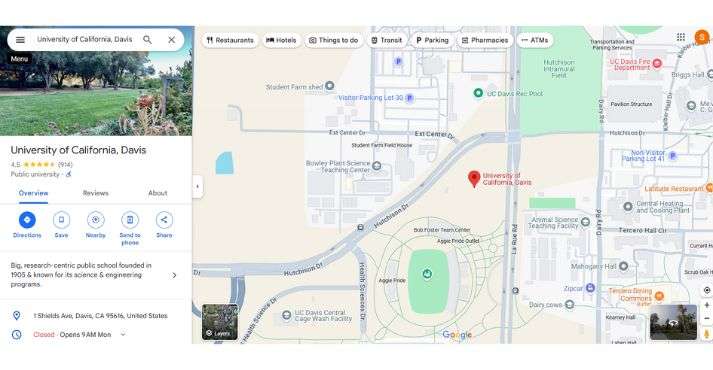
- Optimizing Google Business Profiles
Campus’s Google Business Profile was complete and accurate, featuring up-to-date addresses, contact information, operating hours, and detailed descriptions of available programs.
- Developing Localized Landing Pages
Creating dedicated landing pages tailored to specific regions within California, highlighting programs, campus features, and community involvement relevant to local students.
- Managing Local Citations
Listing each campus in local directories, educational websites, and industry-specific platforms to improve search engine rankings and build trust within the community.
These citations also served as authoritative backlinks, enhancing the overall SEO profile.
- Building Quality Backlinks
Engaging in public relations activities, such as distributing press releases about campus events, new programs, and milestones to media outlets and education-related news platforms, generating high-quality backlinks and increasing visibility.
Execution
With local SEO in place, Google Business Profile optimized, SEO tools to conduct keyword research, and landing pages aligned with the search behaviors of prospective local students, the University was able to generate more inquiries.
One of the landing pages designed by the University highlighted internship opportunities with local companies and focusing on the benefits of studying close to home.
Moreover, UC Davis leveraged well-crafted press releases to announce milestones, events, or new programs to generate backlinks from high-authority news sites.
Results
Within a year of implementing the Local SEO strategy, the UC system observed a significant increase in local engagement metrics:
- Increased Website Traffic: There was an uptick in website visits from users within California, indicating improved visibility among local students.
- Higher Application Rates: Applications from California residents increased.
- Enhanced Search Rankings: The website ranking moves up in the SERPS for local search, making it more accessible to prospective students.
Lessons Learned:
UC Davis’s case study shows the impact of a targeted Local SEO strategy in attracting local applicants.
Key takeaways include:
- Regularly updating Google Business Profiles and local citations ensures that prospective students have access to accurate and current information.
- Tailoring content to address local students’ specific interests and needs enhances engagement and application rates.
- Strategic public relations efforts that result in backlinks from reputable sources significantly boost search engine rankings and credibility.
Consequently, like the University of California, Davis, you can also partner with a higher education SEO agency to implement a strategic local SEO campaign that drives enrollments.
Case Study 3: Wayne State University | Celebrating Alumni Success to Promote Degree Programs
Wayne State University (WSU) is a public research university in Detroit, Michigan. It is one of the largest universities in the state, with over 24,000 students and 350 degree programs. Known for its strong ties to industry and diverse student body, WSU plays a significant role in the region’s educational sector.
Challenge
Wayne State faced the challenge of communicating the real-world value of a university degree, particularly when everyone reconsidered its worth and return on investment.
Therefore, the institution needed a compelling way to showcase student success and reinforce its reputation as a pathway to growing careers.
Strategy
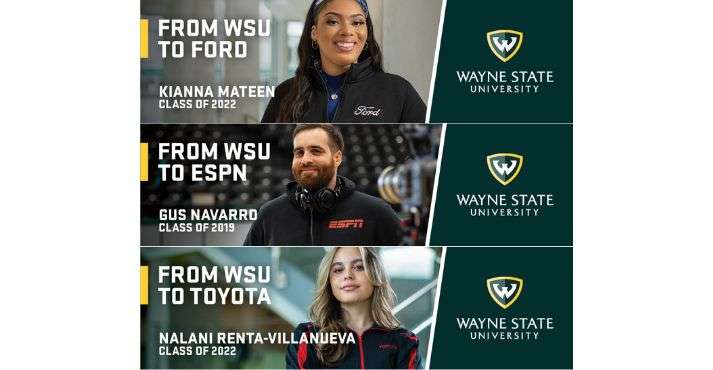
To address this, WSU launched a marketing campaign that highlighted the achievements of recent graduates.
The campaign showcased alumni working at major companies to illustrate the direct impact of a Wayne State degree.
Using a simple and powerful message, “WSU to [company name],” the campaign emphasized career outcomes in a way that resonated with prospective students, families, and the broader community.
Execution
WSU implemented the following ways to execute the alumni marketing campaign:
- Billboard Advertising: WSU placed billboards along key freeways in Southeast Michigan, featuring recent graduates employed at top companies like Ford, Google, ESPN, and the Detroit Pistons.
- Digital & Social Media Integration: The campaign included video content, social media posts, and internal university communications, such as Today@Wayne.
- Employer Collaboration: The Office of Marketing and Communications worked with major employers to obtain permissions and conduct photo and video shoots.
- Multi-Channel Approach: In addition to outdoor advertising, WSU leveraged digital media to maximize visibility and engagement.
Source: WSU
Results
As a result, the billboards and digital campaign reinforced WSU’s position as a university that delivers strong career outcomes.
Also, the campaign increased alumni engagement and strengthened connections between the university and its alumni network.
Most importantly, these success stories reduced the number of dropouts from WSU, as the campaign encouraged students to stay on track and complete their degrees.
Lessons Learned
As we analyzed this case study, the following lessons and key takeaways were derived:
- Authenticity Matters: Featuring real alumni with verifiable career successes made the campaign more impactful.
- Visual Storytelling is Effective. Large-scale visuals, such as billboards and digital media, help capture attention and reinforce the message.
- Employer Partnerships Strengthen Credibility: Collaborating with well-known companies added credibility and demonstrated real-world opportunities for graduates.
- Consistency Across Channels: This campaign’s success highlights the importance of using multiple platforms to maximize reach and engagement.
Case Study 4: Yale University | Podcast to Educate Prospective Students
Yale University is a prestigious private Ivy League institution located in New Haven, Connecticut. Given this reputation, Yale is well-known for its culture of academic excellence and intellectual rigor.
Yale’s most popular academic majors fall within economics, political science, government, history, psychology, and biology.
Yale University is highly selective in its admissions, building a community where people of diverse cultures and nationalities live, work, and play.

Source: Inside the Yale Admission Office Podcast
Challenge
Yale faced a communication challenge: prospective students, parents, and college counselors often had misconceptions about the admissions process.
Myths about scoring, ranking, and selective reading of applications had contributed to unnecessary anxiety.
Therefore, Yale needed a way to simplify its whole-person review process and increase transparency about admissions decisions, reducing stress and building trust among potential applicants.
Strategy
To tackle this challenge, Yale introduced a podcast series, “Inside the Yale Admissions Office.”
The series was designed to provide firsthand insights into the admissions process by featuring candid discussions with admissions officers.
Through the podcast, the admission officers debunk common myths (for example, clarifying that there is no rigid scoring or ranking system) and explain the real practices behind application review to educate the target audience.
The conversational tone was intended to make the process relatable and transparent while representing Yale’s commitment to a fair and holistic review process.
Execution
Yale’s Office of Undergraduate Admissions produced the podcast in-house. Key elements of the execution included:
- Content Creation
Episodes feature detailed discussions about how applications are read and evaluated.
For example, hosts explain that every application is reviewed comprehensively and that decisions are made individually rather than via a formula or rank list.
- Regular Releases
The series launched with an initial three episodes, recorded during the peak “reading season,” when admissions officers evaluate tens of thousands of applications.
Future episodes are scheduled for monthly release.
- Multi-Platform Distribution
To reach a wide audience, the podcast is available on major platforms, including Apple, Spotify, SoundCloud, Stitcher, Android, and Google.
- Respectful Storytelling
Although the discussions are candid, the podcast carefully avoids sharing details from individual applications to protect student privacy.
Results
While metrics (such as enrollment numbers or reduction in applicant anxiety) are not provided, the outcomes include:
- Increased Transparency: Yale has helped debunk longstanding myths, reducing anxiety among prospective students and their families.
- Enhanced Engagement: The podcast has created an accessible forum for discussions about admissions, making the process less intimidating and simple for a diverse audience.
- Credibility and Trust: The open dialogue, delivered by experienced admissions professionals, enhances Yale’s reputation for fairness.
Lessons Learned
The key takeaways from this case study are:
- Providing a behind-the-scenes look at the admissions process can address misconceptions and build confidence among prospective students and stakeholders.
- A well-produced podcast can effectively break down complex administrative procedures into relatable, digestible content.
- Regularly releasing episodes ensures ongoing engagement and conveys that Yale is committed to openness and communication.
- Distributing the podcast across a variety of digital platforms helps ensure that the message reaches a broad and diverse audience.
This case study shows how innovative digital content, such as a podcast series, can be a powerful tool for higher education institutions to communicate with prospective students.
Case Study 5: Arizona State University | Leveraging Chatbots to Engage Diverse Student Population
Arizona State University (ASU) is a large public research university located in Tempe, Arizona.
ASU is known for its innovation, strong academic programs, and commitment to student success. The university has multiple campuses in the Phoenix area, including the main Tempe campus, Downtown Phoenix, Polytechnic, and West Valley.
With more than 100,000 students enrolled (both on-campus and online), ASU offers hundreds of degree programs across a wide range of fields. Its focus on research, community service, and diversity makes ASU one of the nation’s leading institutions.
Challenge
ASU faced a challenge in reaching and engaging a large and diverse student population, especially among incoming freshmen and current students who needed timely reminders and guidance.
For that reason, the university wanted to reduce the workload on its staff by automating common questions and administrative tasks.
Moreover, ASU also needed a way to make sure that important information like upcoming events, deadlines, and available resources are communicated quickly and clearly to thousands of students.
Strategy
To address this challenge, ASU developed an automated chatbot called “Sunny.” The main ideas behind this strategy were to:
- Improve Communication: Provide students with instant updates on campus events, deadlines, and support services.
- Offer Support: Answer routine questions about orientation, class registration, and campus life, and guide students when they need help.
- Reduce Staff Workload: Automate repetitive tasks so that university staff can focus on more complex issues.
- Build Connection: Create a friendly, “always-on” digital assistant that students can rely on for quick help.
Execution
ASU put the plan into action by designing Sunny as an AI-powered chatbot that sends text messages to students.
Here’s how they did it:
- Technology Platform
Sunny was built using tools from Amazon Web Services, including natural language processing features that help the bot understand and respond to student questions.
- Integration
The chatbot is integrated with the ASU mobile app and other communication channels, making it easy for students to interact with Sunny using their phones.
- Two-Way Communication
Sunny is designed to have a conversation with students. It sends reminders about deadlines and campus events and can also answer common questions.
If Sunny cannot answer a question, it flags the conversation so a human advisor can follow up.
- Wide Reach
Since its launch in 2018, Sunny has been used during key times such as the admissions process and even during the COVID-19 pandemic, when it helped keep students informed about health checks and safety guidelines.

Source: ASU
Results
The implementation of Sunny has brought several benefits, such as:
- Sunny has sent millions of text messages, saving hundreds of staff hours by handling routine inquiries automatically.
- Llarge number of students have opted in to receive Sunny’s messages, which shows that many find it helpful for keeping up with important campus information.
- Students have received timely reminders and guidance on completing tasks like orientation activities, which helps them stay on track academically and personally.
- Many first-year students appreciate the quick responses and friendly tone of Sunny, although some older students feel it is less essential for their needs.
Lessons Learned
ASU’s experience with Sunny provides several key takeaways:
- Automated Tools Work: A well-designed chatbot can engage a large number of students and reduce the burden on staff by handling common questions and reminders.
- Timely Interventions Matter: Delivering information and support quickly helps students feel connected and supported, especially during critical periods like orientation or times of crisis.
- Blend Technology with Human Touch: While Sunny handles many routine tasks, it is important to have human advisors available for complex or sensitive issues.
- Continuous Improvement: The more students use Sunny, the better the chatbot becomes at answering questions. Ongoing feedback and updates are essential to keep the tool useful and accurate.
- Creating a Friendly Connection: Even though Sunny is an automated tool, its friendly tone helps build a positive connection between students and the university.
This case study shows that ASU has improved communication, increased student engagement, and reduced staff workloads using an AI-powered chatbot like Sunny.
Case Study 6: University of California, Berkeley | Attracting International Students with a 360-degree Virtual Tour
The University of California, Berkeley, is a prestigious public research university in Berkeley, California.
Known for its rich history and strong academic programs, Berkeley has a large and diverse community of students, faculty, and staff.
Its campus is famous for iconic landmarks like Sather Gate and Sproul Plaza, and it is celebrated for its role in social movements and academic excellence.
Source: UC Berkeley
Challenge
UC Berkeley needed a way to connect with prospective students and families who could not visit the campus in person.
With travel restrictions during the COVID-19 pandemic and growing international interest, the university faced the challenge of effectively sharing its campus experience, history, and culture with people around the world.
Moreover, traditional in-person tours were not enough to reach everyone.
Strategy
To overcome this challenge, Berkeley’s Office of Undergraduate Admissions and Visitor and Parent Services partnered with YouVisit, an online platform specializing in virtual tours.
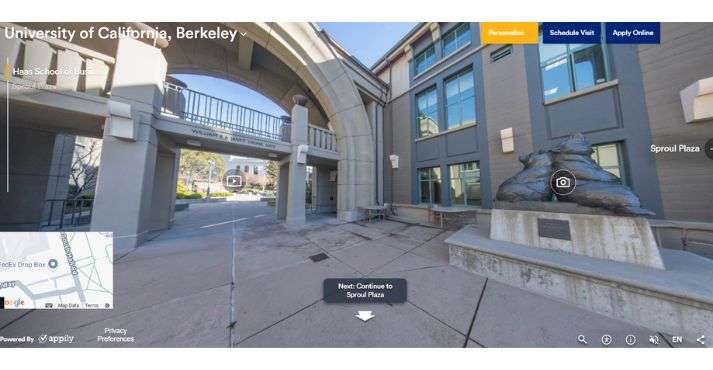
The idea was to create an immersive, 360-degree virtual campus tour that allows visitors to see and interact with the campus from their laptops, tablets, or smartphones.
This virtual tour was designed to showcase the beautiful views and key landmarks and share deeper stories through photos, videos, and audio from campus guides and faculty.
Execution
The virtual tour was developed by filming 20 different locations across the campus, starting near Memorial Stadium.
At each stop, interactive hot spots were added, where users could click to watch videos, view photos, and listen to stories about Berkeley’s history and culture.
The tour features:
- Interactive Elements: Visitors can click on hot spots that reveal videos and additional information, such as the history of Sather Gate or the significance of Sproul Plaza.
- Multimedia Content: The tour includes recorded greetings (for example, from Chancellor Carol Christ), video lectures from notable faculty like Professor Robert Reich, and audio clips like the Cal Band playing at Haas Pavillion.
- Accessibility: The platform is available in Spanish and is designed to be accessible to people with disabilities.
- Integration with Outreach: The virtual tour complements other digital outreach events, such as Cal Day and Cal Week, which also moved online due to the pandemic.
Results
The virtual tour has had a positive impact on how prospective students and families experience UC Berkeley.
Key outcomes include:
- Wider Reach: Students and parents from anywhere in the world can now explore the campus at any time, breaking down geographical barriers.
- Enhanced Engagement: The interactive features have provided a richer, more engaging experience than static photos or videos alone.
- Improved Perception: Feedback from tour-goers shows that they appreciate the opportunity to see Berkeley “like never before.” Many say the tour helped them feel more connected to the campus and confident that Berkeley is the right choice for them.
Lessons Learned
Berkeley’s virtual campus tour offers several important takeaways:
- When in-person visits are not possible, a well-designed virtual tour can provide an interactive and immersive experience that still conveys the spirit and history of a campus.
- Adding hot spots, videos, and audio clips creates a dynamic experience that helps visitors learn more deeply about the institution.
- Offering the tour in multiple languages and ensuring accessibility to people with disabilities broadens the potential audience.
- Even for those who have visited campus before, the tour offers new insights and a chance to reconnect with campus culture.
- In-person tours and outreach events combined with virtual tours are valuable in the university’s recruitment and engagement strategy.
This case study shows how UC Berkeley successfully used the virtual tour as a marketing tool to extend its campus experience beyond physical borders, making the community accessible to a global audience.
Case Study 7: University of Florida | Crafting a Mobile Experience for Gen Z
The University of Florida (UF) is a large, public research university in Gainesville, Florida.
UF is known for its strong academic programs, vibrant campus life, and significant contributions to research and innovation.
The university’s website is integral to its communication strategy. It serves current and prospective students, faculty, staff, and alumni.
Challenge
UF recognized that more than half of all online traffic now comes from mobile devices.
This is especially important considering that Gen Z is a large segment of prospective students, a generation of digital natives who expect fast, seamless, and visually engaging online experiences.
Gen Z visitors are accustomed to intuitive apps and responsive websites, and they quickly lose interest if a site is difficult to navigate on a smartphone or tablet.
Thus, UF needed to ensure its modern website, with high-quality imagery and clear, easy-to-read text, would provide a smooth, engaging experience on any device, meeting the high expectations of Gen Z users.
Strategy
To meet these expectations, UF focused on responsive web design. The strategy involved:
- Modern Aesthetic: Using high-quality imagery and clear, easy-to-read text to create an appealing visual experience.
- Adaptability: Building a flexible layout that automatically adjusts to fit different screen sizes—from desktops to mobile phones.
- Mobile-Friendly Features: Incorporating design elements like hamburger menus and thumb-friendly buttons, ensuring the site is easy to navigate on a touchscreen.
Execution
UF implemented responsive design by redesigning its homepage and key sections of the website:
- Flexible Layouts: The site’s grid system was built to reflow and resize based on the device’s screen dimensions, ensuring consistency across platforms.
- Interactive Elements: Hamburger menus and easy-to-tap buttons were introduced to simplify navigation on smaller screens.
- Optimized Content: Visuals and text were optimized to maintain appeal and readability regardless of the device.

Source: UF
Results
The move to a responsive design has led to a more positive user experience:
- Visitors enjoy a seamless experience, whether on desktop or mobile, which keeps them engaged and more likely to explore further.
- With a design that adapts to any screen size, UF ensures that critical information is accessible to a wide range of users, including tech-savvy Gen Z audiences.
- A modern, mobile-friendly website reflects UF’s commitment to innovation and quality, helping attract prospective students who value digital experiences.
Lessons Learned
UF’s experience with responsive design offers several key takeaways:
- With over 50% of web traffic coming from mobile devices and Gen Z expecting high-quality digital experiences, a responsive website is no longer optional.
- Focus on Mobile-First Features: Design elements like hamburger menus and thumb-friendly buttons greatly improve the experience for mobile users, making the website more accessible and engaging for younger audiences.
This case study of the University of Florida shows that by investing in responsive design, the university successfully meets the expectations of today’s mobile-first generation, ensuring that its digital presence is engaging and accessible to everyone.
Case Study 8: Oxford University | Reaching the Right Audience With Micro-Influencers
The University of Oxford is the oldest in the English-speaking world, dating back to the 12th century.
Located in Oxford, England, it is known for its rigorous academic standards and rich traditions. With a large, diverse student body and a global reputation for excellence, Oxford has long been seen as a symbol of high academic achievement.
The university currently enrolls over 26,000 students, with approximately 12,470 undergraduates and 13,920 postgraduates. International students comprise 46% of the student body, representing over 160 countries and territories.
Undergraduate admissions are highly competitive, offering around 3,300 places annually, with over 23,000 applicants in 2023.
On the postgraduate front, Oxford offers 450 courses and received over 37,500 applications for approximately 6,056 places for the 2022/23 entry.
Economically, the university contributes around £15.7 billion to the UK economy and supports more than 28,000 full-time jobs (2018/19).
Challenge
Oxford’s admissions process is complex and detailed. The process can seem intimidating and inaccessible for many prospective students, especially those from underrepresented backgrounds.
The high walls, both academic and the lengthy application process, often discourage talented students from applying.
Therefore, in today’s digital age, reaching a younger, tech-savvy audience (like Gen Z) with relatable, easy-to-understand information became a key challenge for the university.
Strategy
Tilly Rose, known as “That Oxford Girl,” took a creative approach to this challenge.
Instead of relying on official university channels, she used her own Instagram account and blog to share personal stories and practical advice about the Oxford application process and student life.
Given that, she helped the students simplify the admissions process and made Oxford feel more accessible to a wider audience.
Execution
To connect with the students and encourage them to apply at Oxford, the University leveraged micro-influencers in the following ways:
- Social Media Presence: Tilly started an Instagram account where she posts photos, videos, and stories that offer a behind-the-scenes look at life at Oxford.
- Personal Blog: On her blog, “That Oxford Girl,” she writes in an engaging and friendly tone about her experiences, tips, and insights into navigating Oxford’s complex systems.
- Relatable Content: Her posts include advice on preparing applications, insights into student life, and reflections on her own journey.
- Consistent Engagement: Over time, her authentic and consistent content has attracted a strong following, making her an influential voice for prospective and current students.

Source: That Oxford Girl
Results
As the followers started to grow, the result of this micro-influencer partnership included:
- Widespread Reach: Tilly’s blog has gained over 400,000 views, and her Instagram account has grown to over 46,000 followers.
- Enhanced Accessibility: She has made Oxford more approachable and less challenging by breaking the journey for prospective students.
- Increased Engagement: Her relatable style has resonated with students. She provides a free resource that complements official university communications and helps students feel more confident about applying.
Lessons Learned
As we analyzed this case study, the following lessons were derived:
- Authenticity wins; thus, colleges must build genuine connections based on personal experiences rather than formal marketing messages.
- Even a single dedicated voice, like Tilly’s, can have a huge impact by reaching thousands of prospective students with tailored, accessible advice.
- As more young people turn to social media for information, partnering with micro-influencers is key to building a diverse and engaged applicant pool.
This case study highlights how Oxford University, through the organic efforts of a passionate micro-influencer, has managed to lower the barriers of its complex admissions process, making the university more accessible and appealing to a new generation of applicants.
Case Study 9: Georgia State University | Data-Driven Marketing to Target Prospective Students
Georgia State University, founded in 1913, is a public research institution in downtown Atlanta with five additional campuses.
Georgia State contributes $3.2 billion annually to Atlanta’s economy and supports the workforce, with 70% of alumni residing and working in the area.
As one of the fastest-growing research institutions in the U.S., the university secured $185.72 million in research funding in fiscal year 2024 and ranks first in Georgia for R&D expenditures in non-science, engineering, and social sciences fields.
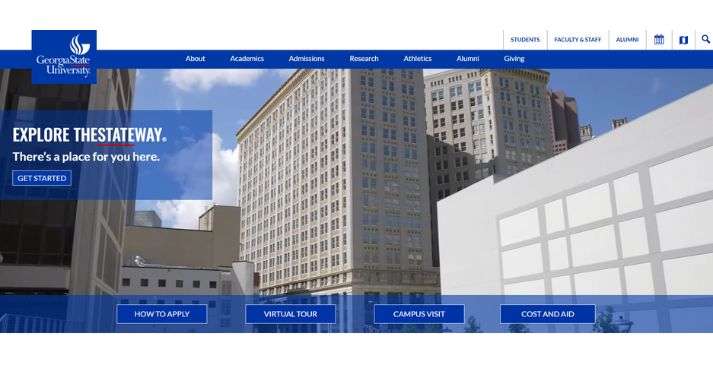
Source: GSU
Challenge
GSU faced a significant challenge in addressing uneven graduation rates, particularly among minority students. In 2008, the university experienced high dropout numbers, with around 5,600 students leaving annually.
Therefore creating an achievement gap between white students and those from African American and Hispanic backgrounds. For example, the six-year graduation rate for African American males was only 18%.
Strategy
To tackle these disparities, GSU implemented an innovative, data-driven academic support program called GPS Advising (Graduation Progression Success).
The strategy centered on using data analytics to monitor student performance and behaviors across the campus.
Management analyzed 10 years of data, including 2.5 million grades and 140,000 student records. As a result, the university identified approximately 800 behavioral indicators correlated with student dropout risks.
The goal was to use these insights to offer timely, personalized interventions, thus improving graduation rates and shortening the time to degree completion.
Execution
GSU executed the strategy by integrating several advanced tools and platforms:
- Data Integration
The university integrated a platform from the Education Advisory Board (EAB) that connected directly with its student information systems, enabling real-time tracking of academic performance and behavioral patterns.
- In-House Systems and AI
An internally developed system that monitored class attendance by tracking Wi-Fi logins and learning management system activity.
- A-Chatbot
A custom AI-powered chatbot was also used to address student admissions, enrollment, and academic support inquiries.
- Timely Interventions
An alert was sent to the assigned adviser whenever any of the 800 risk indicators were triggered.
For example, if a student withdrew from a course mid-semester or showed a decline in digital engagement. These advisers had a 48-hour window to reach out and offer face-to-face support.
- Financial Support:
Recognizing financial barriers contributed to dropout rates, GSU introduced microgrants (Panther retention grants).
Over the past seven years, more than 13,000 grants have been awarded, helping students overcome tuition challenges and stay enrolled.
Results
The results of the data-driven GPS Advising program have been remarkable:
- Improved Graduation Rates: For African American males, the rate increased from 18% to 55%, tripling within a relatively short period.
- Financial Impact: The program saved money by retaining students who might have otherwise dropped out and generated additional revenue.
- Enhanced Reputation and Enrollment: GPS Advising’s success has enhanced GSU’s reputation for student support, attracting new enrollments.
Lessons Learned
GSU’s case study offers several key takeaways:
- Proactive Data Use: Leveraging detailed, real-time data can help identify at-risk students early, allowing for timely and effective interventions.
- Customized Interventions: Personalized academic support, including academic and financial aid, is important in closing achievement gaps.
- Technology Integration: Combining commercial platforms with in-house tools and AI capabilities creates a strong support system that can adapt to student needs.
- Scalable Model: GPS Advising’s success shows that data-driven strategies can be scalable for other institutions facing similar challenges in boosting graduation rates and ensuring equitable student success.
These insights highlight the impact of integrating data analytics into enrollment funnel, academic advising and support, offering a compelling blueprint for other higher education institutions seeking to improve student outcomes.
Conclusion
To conclude, all these nine case studies show a transformative shift in higher education marketing and digital engagement.
Institutions such as Wayne State, UC Davis, Oxford, and others have shown that innovative strategies, from leveraging AI-powered chatbots and virtual tours to the authentic voices of micro-influencers, can dramatically enhance student recruitment, engagement, and retention.
Each case highlights a distinct approach, with responsive web design that every prospective student (digital-savvy) expects and the impact of localized SEO strategies to boost visibility in targeted communities.
Meanwhile, platforms like YouVisit provide immersive virtual experiences that bridge the gap when physical campus visits are not possible.
Given that, it is clear that a one-size-fits-all approach no longer works, and colleges and universities must adopt multifaceted strategies to maintain relevance and authenticity.
Most importantly, higher education institutions must plan for every touchpoint in the student enrollment funnel, making it engaging and accessible to convert inquiries into leads and answering questions throughout their academic journey.
Frequently Asked Questions
What makes a higher education marketing campaign successful?
The most successful higher education marketing campaigns combine data-driven targeting, creative diversity, and authentic student stories. They target specific audiences with platform-native content, test multiple creative variations, and optimize for enrolled students rather than clicks. Every case study above shares these patterns.
How do universities measure marketing ROI?
The key metrics are cost per enrolled student (not just cost per lead), application quality (acceptance rate of marketing-generated leads), and lifetime value of enrolled students. Top institutions track the full funnel from first ad impression through enrollment and compare costs across channels.
Which marketing channels work best for universities?
Meta (Facebook and Instagram) and Google are the primary channels. TikTok is increasingly essential for undergraduate recruitment. LinkedIn works best for graduate programmes. SEO drives sustainable long-term traffic. The most effective approach uses 2-3 channels with platform-specific creative for each.
How much should universities spend on marketing?
Most universities allocate 6-15% of revenue to marketing. The exact amount depends on enrollment targets, competitive landscape, and programme pricing. More important than total budget is creative quality and systematic testing. A moderate budget with diverse, well-tested creative outperforms a large budget with a single ad running for months.
Can small universities compete with large ones in digital marketing?
Yes. Several case studies above show smaller institutions outperforming larger ones through strategic targeting and authentic storytelling. Digital marketing rewards creative quality over budget size. A small university with compelling student stories, tight targeting, and systematic creative testing can outperform a large institution running generic brand ads.
Related: Higher education marketing | 15 best university marketing campaigns | Facebook ads for education | Our case studies | Free landing page analyzer

Manno Notermans
I’m Manno, co-founder and CSO at Think Orion. I work with universities, exam prep companies, and course creators to use insight-led marketing that reflects how people choose what to learn. Most of my work comes down to understanding those choices and helping education brands align with them. At Think Orion, we use research, creative strategy, and clear systems to help good programs reach the right students.
View LinkedIn profile