

Are you a chef or someone who likes to cook? It’s the best time to monetize your skills and deliver online cooking classes. Turn your passion into revenue streams.
The global online cooking class market is expected to reach US$ 485.83 million by 2027. With the rise of online platforms, improve the online visibility of your cooking classes and generate more signups.
While this may seem overwhelming initially, starting an online cooking class is pretty straightforward. But with the right strategies to promote your course, you’ll get your name out there.
In this blog, we’ll explore strategies to promote online cooking classes.
- Know Your Target Audience
- Build a Compelling Online Presence
- Collaborate with Influencers and Food Bloggers
- Implement Search Engine Optimization (SEO) Strategies
- Offer Free Resources and Tasters
- Leverage Paid Advertising
- Collect and Showcase Testimonials
1. Know Your Target Audience
How likely are you to hit your target? Knowing your target audience can help you create better profiles and reach prospective students.
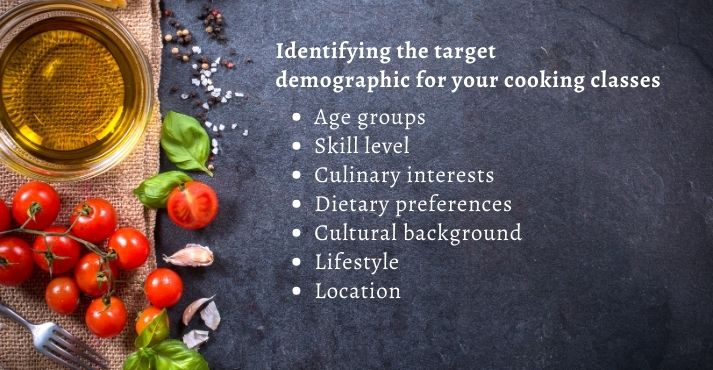
Identifying the target demographic for your cooking classes
Here are some factors to consider when defining your target demographic:
- Age groups: Different age groups may have varying interests and skill levels
- Skill level: Determine if your classes cater to beginners, intermediate cooks, or advanced culinary enthusiasts.
- Culinary interests: Some may be interested in baking, while others may prefer savory cooking or international cuisines.
- Dietary preferences: Consider whether your classes will focus on specific dietary preferences or restrictions, such as vegetarian, vegan, gluten-free, or paleo options.
- Cultural background: Take into account the cultural background of your target audience.
- Income level: Consider the affordability of your classes and whether they align with the disposable income of your target demographic.
- Lifestyle: Are they busy professionals looking for quick and easy recipes, or do they have more time for in-depth culinary experiences?
- Location: Local demographics, including urban or suburban settings, can influence the types of participants you attract.
Considering these factors, you can create cooking classes that resonate with your target demographic, making your offerings more appealing and successful.
Understanding the needs and preferences of your audience
As an online cooking classes instructor, understanding your audience’s needs and preferences is essential to tailor your classes accordingly. Engage with your audience through interactive elements, live Q&A sessions, and diverse culinary topics to gain insight and valuable data.
2. Build a Compelling Online Presence
Looking for ways to market your cooking class? Once you’ve sorted your course outline and identified your target audience, it’s time to build a compelling online presence.
An engaging online presence enables you to reach a broader audience, fosters community interaction, and supports marketing efforts.
Develop a professional website for your cooking classes.
A website is a great way to showcase your online cooking classes and attract new students. A well-designed site communicates professionalism, showcases your expertise, and facilitates easy enrollment.
Consider these elements when developing a professional website for your online cooking classes:
- Homepage
- About us with instructor profile
- Class schedule and pricing
- Course outline
- Course reviews and testimonials
- Blog section
- FAQ section
- Social media integration
- Mobile Responsiveness
A professional website enhances your brand, making cooking classes more accessible and appealing.
Utilize social media platforms to showcase your expertise and classes
Leverage social media platforms to connect with a broader audience, build a community, and promote upcoming classes. You can share cooking tips, behind-the-scenes glimpses, and visually appealing dish images to promote your course on social media.
Create engaging content such as blog posts, videos, and recipes
Craft engaging content like blog posts, videos, and recipes for your online cooking classes to captivate and educate your audience. Videos can offer step-by-step tutorials, while blog posts and recipes provide valuable insights and inspiration.
3. Collaborate with Influencers and Food Bloggers
Do you know how to sell online cooking classes through influencers and food bloggers? Dont worry; we’ve got you covered.
Collaborate with influencers and food bloggers to amplify the reach of your online cooking classes. Influencers can share their experiences, participate in classes, and create engaging course content about your offerings.
Collaboration increases visibility and establishes your classes within relevant communities eager to explore your culinary expertise.
Identifying relevant influencers and bloggers in the food and cooking niche
Following are the different avenues to identify influencers and bloggers in a cooking niche:
- Social media platforms
- Food and cooking blogs
- Recipe websites
- YouTube channels
- Instagram accounts
- Facebook groups
- Podcasts related to food
- Culinary events and conferences
- Networking events and meetups
Their collaboration will enhance the visibility and success of your online cooking classes.
Reaching out for collaborations, reviews, or features
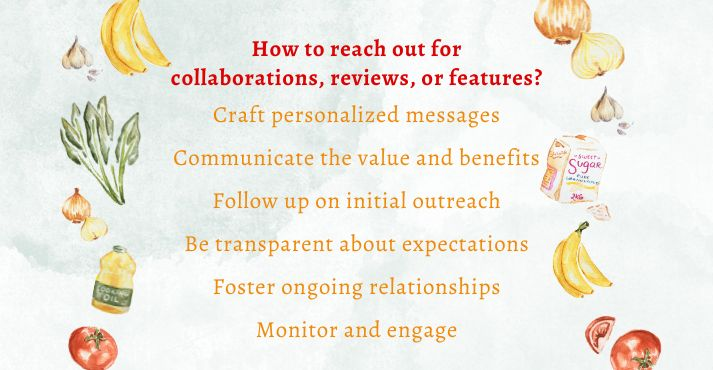
Initiate collaborations, reviews, or features by contacting influencers and bloggers in the food and cooking niche. The most essential element of reaching out is highlighting your value; proposing mutually beneficial partnerships can lead to positive responses.
Follow these steps to reach out:
- Craft personalized messages
- Communicate the value & benefits
- Follow up on initial outreach
- Be transparent about expectations
- Foster ongoing relationships
- Monitor and engage with collaborations
Establishing these connections can increase visibility, authentic endorsements, and a broader audience for your online cooking classes.
Leveraging their audience to promote your cooking classes
Collaborations allow you to tap into their communities already interested in culinary content. It gives your cooking classes more visibility and credibility and introduces your offerings to a broader demographic.
4. Implement Search Engine Optimization (SEO) Strategies
By organizing the information, search engines like Google help billions of online users find the content they are searching for.
Do you know how to promote your online cooking classes using SEO?
Implementing SEO strategy refers to creating, optimizing, and promoting content to improve its visibility in search engine results, attracting more organic traffic to your website.
Optimize your website for relevant cooking and culinary keywords
Optimize your website with key terms related to your cooking classes, cuisines, and expertise. Utilize meta tags, titles, and descriptions with targeted keywords to improve search engine rankings.
Create quality, keyword-rich content to improve search engine rankings
Here’s how you can create keyword-rich content to improve SERPs:
- Conduct keyword research
- Integrate keywords into website copy
- Optimize meta tags, headers, and image alt text
- Develop informative and engaging content
- Create keyword-rich blog posts
- Monitor analytics for performance
Regularly update content and monitor analytics to refine your strategy, ensuring your website ranks higher in search results and attracts a broader audience to your cooking classes.
Utilize local SEO strategies to attract a geographically targeted audience
Local search is even more critical than traditional organic site ranking. Proximity, prominence, and relevance are the core fundamentals of local SEO.
While implementing SEO for your online cooking classes, create your profile on Google My Business (GMB) to improve visibility.
5. Offer Free Resources and Tasters
If you run your own business, you’ll know you often have to spend money to make money. Likewise, to sell online courses, you need to provide free resources and tasters to prospective students to entice them to take action and enroll online.
Providing free cooking tips, recipes, or short online classes
By providing valuable cooking tips, recipes, or short online courses, you can capture the attention of prospective students and increase the likelihood of converting them into sales.
This strategy builds trust, showcases expertise, and gives potential students a taste of what to expect. Also, it helps you create a connection, demonstrating the quality of your instruction.
Allowing potential students to experience your teaching style before committing
As a course creator, you can ask students to sign up and receive free videos and lectures before enrollment to understand the teaching style and expertise. It allows prospective students to experience the quality of instruction, fostering trust and interest in the course.
Free content is a powerful marketing tool, converting them into confident students who value the creator’s approach and are more likely to enroll in online cooking classes.
Using free resources as a lead generation tool
Free resources act as a lead-generation tool, attracting prospective students who might convert into enrolled students. This initiates student engagement and establishes a relationship that can lead to future sales.
6. Leverage Paid Advertising
High-quality content shared via ads can help you reach your goals. If you know how to promote online cooking classes by leveraging paid advertising, you can reach your target audience faster and expand your market to drive revenue.
Utilizing online advertising platforms like Google Ads and social media ads
Google and social media ads stand out among the best-paid advertising platforms. Google ads allow you to be at the top of search results and capture the attention of active prospective students searching for online cooking classes.
Google ads can result in highly targeted and valuable traffic to their websites.
Social media ads like Facebook, Instagram, and Twitter offer highly granular targeting options. However, engaging visuals and compelling ad copy are key.
Creating visually appealing ad creatives with a clear call to action
In the digital world of advertisements, some are brilliantly designed to capture attention, while poorly executed ones go unnoticed.
Pay attention to the following aspects when designing your ads:
- Compelling content that resonates with your target audience
- Visually appealing design elements that align with your course
- A clear and prominent call to action button
Pro-tip: The bold and centered text on ads draws attention first, whereas the text at the top of the banner is read last, despite its position, because it is not as prominent as the others.
Setting a budget and monitoring the performance of paid campaigns
A well-managed budget ensures cost-effectiveness, maximizing the reach of potential students. Monitoring campaign performance will allow you to refine strategies, identify successful channels, and allocate resources wisely.
7. Collect and Showcase Testimonials
Do you use testimonials on your website for prospective students to review? If not, you’re missing out on a huge opportunity to use social proof. Showcasing testimonials helps you build brand awareness, boost conversions, and increase the enrollment rate for your cooking classes.
Encouraging students to provide feedback and testimonials
Getting testimonials may initially seem intimidating, but it will help boost your credibility and increase conversions. Here are some ways to encourage students to provide feedback and testimonials:
- Encourage active participation through live Q&A sessions
- Offer exclusive recipes or cooking tips as a reward for feedback
- Create a dedicated space for students to share success stories
- Use engaging multimedia formats for feedback submissions
- Organize virtual cooking events for participants to showcase their skills
Remember, student feedback and testimonials about your cooking class are the perfect way to convince prospective students to enroll in your course.
Displaying positive testimonials on your website and promotional materials
Positive feedback builds credibility and trust, assuring prospective students of the value they can expect. Nowadays, students look for social proof before enrolling. Therefore, positive testimonials can be a powerful motivator for new enrollments.
Building trust and credibility through the experiences of past students
As a course creator, you must also focus on building trust and credibility among students through past student experiences when understanding how to promote online cooking courses.
And for this, you need to be considerate about the negative experiences, as not all students may have a positive experience. It will help new students to be confident, share insights, and give feedback throughout the course.
The experience of past students acts as a piece of concrete evidence; new and prospective students will be less skeptical about enrolling in your online cooking course.
Final Words
Implementing effective strategies to promote your online cooking classes in the digital landscape requires you to stay proactive and be visible across platforms.
Crafting engaging content across various platforms, leveraging social media influencers, and optimizing search engine visibility are essential components. Eye-catching visuals and testimonials can enhance credibility, enticing potential students to enroll.
Hence, a multifaceted approach to promoting online cooking classes will help you get maximum enrollments and earn students’ trust.

Manno Notermans
I’m Manno, co-founder and CSO at Think Orion. I work with universities, exam prep companies, and course creators to use insight-led marketing that reflects how people choose what to learn. Most of my work comes down to understanding those choices and helping education brands align with them. At Think Orion, we use research, creative strategy, and clear systems to help good programs reach the right students.
View LinkedIn profile