Do you want to attract prospective students to enroll in your college but find it difficult to connect with them, particularly if they live out of state?
That’s where student ambassadors come in.
Student ambassadors are your on-campus advocates, living the experience right now and offering a firsthand perspective.
They are, in essence, creating a sense of belonging among prospective students, even before they’ve applied.
This creates an authentic, relatable connection, often more powerful than traditional marketing.
While it can take time to build your program, the effort is usually well worth it.
A well-run ambassador program can drive measurable results, including higher engagement and increased applications.
So, how do you run a successful College Ambassador Program (CAP)?
In this post, we’ll dive into the steps you must take to launch your program and provide helpful tips for ensuring its success.
Quick Takeaways
This article explains how to market your online courses and increase conversions.
- The basics of a college/university ambassador program
- Examples of student ambassador programs
- How to start a student ambassador program (step-by-step)
- 3 tips to run a successful college ambassador program
Understanding the Basics of a College Ambassador Program
A College Ambassador Program (CAP) is a structured marketing strategy that leverages current students to promote a brand (institution) to recruit prospective students.
The core goal of a College Ambassador Program is to build brand awareness through authentic, peer-to-peer marketing.
Unlike traditional advertising methods, this program taps into the power of student advocates who share their personal experiences with their peers.
With the oversight of the admissions department, the role of a college ambassador includes:
- Promote college or university through word-of-mouth and social media.
- Host campus events and information sessions.
- Represent the brand at university fairs or expos.
- Share personal experiences and insights about the brand.
- Engage with peers to create buzz and excitement.
As a result, your college brand gets more visibility, sparks more interest, and can even see higher applications.
So, how do you choose your college ambassador?
To begin with, they are selected based on their enthusiasm for the brand, campus influence, and ability to communicate with prospective students.
Additionally, here are some key qualities that you must look for when choosing a college ambassador:
- Strong communication skills
- Enthusiasm and passion for the brand
- Leadership and initiative
- Active social media presence
- Relatability and influence among peers
Remember, the ambassador needs to be relatable and realistic when sharing content about the institution.
Read more: 15 University Marketing Campaigns to Drive Interest
Best Student Ambassador Programs Examples
Running a successful student ambassador program goes beyond simply putting logos on campuses or selecting students to represent your brand.
It involves strategic planning, building strong relationships, and empowering these young college ambassadors to share your brand’s story with confidence.
Here are some great examples:
1. Stevenson Ambassadors Program
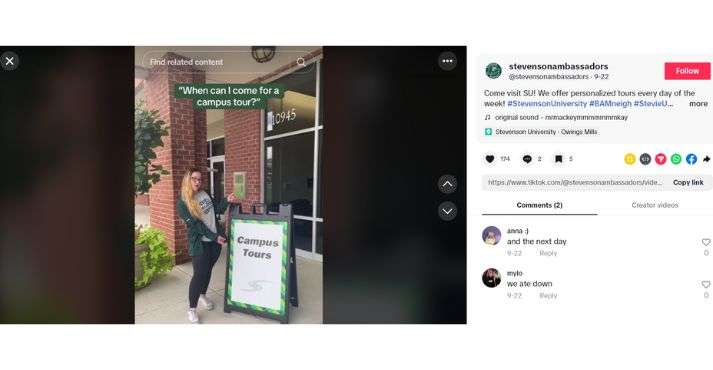
The Stevenson College Ambassador program is a fantastic example of driving student engagement through TikTok.
In this program, college ambassadors create content highlighting key campus locations and offering tips for prospective students during campus tours.
Source: TikTok
These college ambassadors make the campus more inviting and relatable. Furthermore, using TikTok as a platform is particularly smart because it allows ambassadors to connect with a younger audience in a fun and engaging way.
Their authentic, peer-to-peer messaging resonates well with potential students, making them more likely to consider Stevenson.
2. Clemson University Student Ambassadors for Science Program
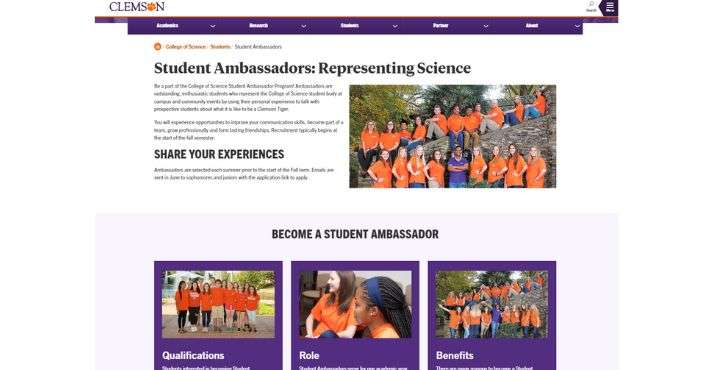
The College of Science Student Ambassador Program at Clemson University is a great example of a focused college ambassador initiative.
This program recruits enthusiastic students to represent the College of Science at campus and community events.
Source: Clemson University
Ambassadors share their personal experiences regarding the science program, giving prospective students interested in this study area a real look at life at Clemson.
Moreover, these ambassadors are chosen based on specific qualifications, such as completing at least 30 credit hours and maintaining a minimum GPA of 3.0 in relevant majors.
Once selected, they participate in various activities, including helping with events like Future Tiger Day and supporting student appreciation gatherings.
In return, ambassadors gain valuable skills, build networks, and enhance their resumes while making lasting friendships.
3. Drexel University Student Ambassador Program
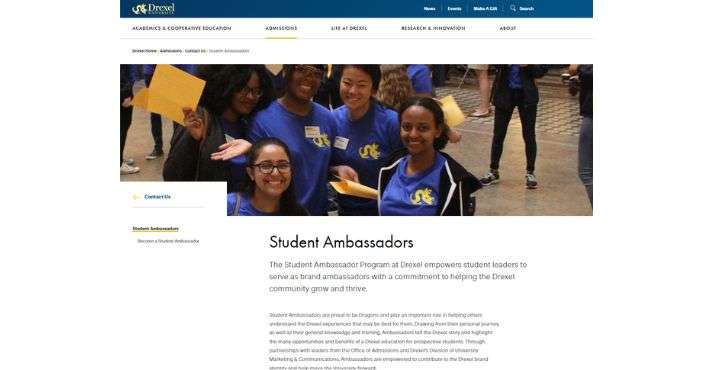
The Drexel University Student Ambassador Program creates a sense of community and pride among its ambassadors, who are dedicated to helping prospective students understand the unique Drexel experience.
Ambassadors share their personal journeys and insights, highlighting the opportunities and benefits of a Drexel education.
Source: Drexel University
Moreover, this program's strong partnership with the Office of Admissions and the Division of University Marketing & Communications makes it unique.
As a result, this collaboration empowers ambassadors to actively contribute to Drexel’s brand identity while helping to promote the university.
Additionally, the “Ask An Ambassador” initiative allows prospective students to connect directly with current ambassadors at the Admissions Visit Center, creating a welcoming and informative environment.
Steps to Start a College Ambassador Program
Creating a successful college ambassador program can greatly benefit institutions by connecting them with students in an authentic way.
Here’s a step-by-step guide to help you get started:
- Identify Goals and Target Audience
- Build a Recruitment Strategy
- Provide Training and Resources
Step 1: Identify Goals and Target Audience
First and foremost, defining what you want to achieve with the program is essential.
The clearer and more measurable the goals, the more likely the program will succeed.
For example, a smart goal could be:
- Increase brand awareness on social media by 25% over the next six months via a digital ambassador campaign.
- Increase program inquiries by 20% via on-campus recruitment events in the next eight months.
These goals will guide the structure and activities of your program.
Next, you should identify the appropriate student demographic that aligns with your education brand. Consider factors like age, interests, and majors.
This will help you connect with students who can genuinely advocate for your brand.
Read more: Digital Marketing for Education Brands
Step 2: Build a Recruitment Strategy
Once your goals are set, it’s time to think about how to recruit the best ambassadors.
To start, consider using social media platforms where students are active. For example, Instagram, TikTok, and Facebook can be effective channels for outreach.
Additionally, create a brand ambassador application for interested students to fill out with a rubric of key skills and qualities they should possess.
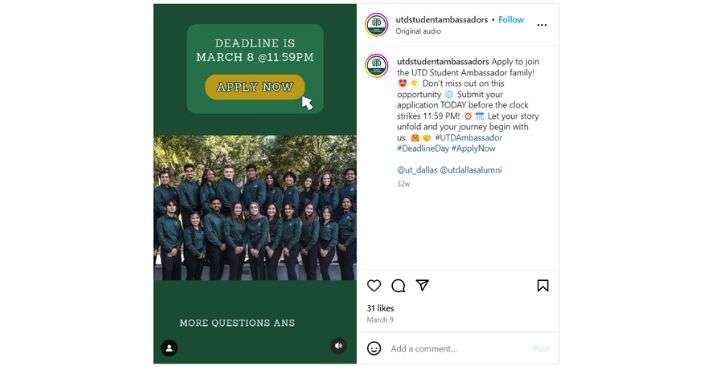
Here’s a great way of how the University of Texas at Dallas conducted an ambassador recruitment drive.
Source: Instagram
They shared an engaging video featuring student ambassadors walking around campus and discussing their experiences.
In the video, current ambassadors explain why other students should also consider applying to become ambassadors.
Moreover, we recommend that you choose students who:
- Are involved in athletics, student groups, study abroad programs, and other activities that prospective students might find interesting.
- Have received support from teachers or staff that helped them grow in their studies, social life, and personal development.
- Possess strong leadership qualities, including good communication skills, a positive attitude, a welcoming nature, and a desire to help others.
- Show professionalism in their work, volunteering, and schoolwork, showing determination to achieve their goals.
Additionally, you should choose ambassadors from different backgrounds.
If your ambassador group lacks diversity, it might make families less interested in attending, especially if they don’t feel represented, understood, or welcomed.
Step 3: Provide Training and Resources
After you’ve recruited your ambassadors, the next step is to provide them with training and resources.
This is crucial because well-informed ambassadors are more effective in promoting your brand.
To start, begin by emphasizing the importance of understanding your brand values and vision.
Moreover, potential training topics must include public speaking, social media management, and event planning.
In addition to this, provide them with promotional materials, such as flyers, social media templates, or samples of your products.
Furthermore, setting clear expectations regarding their responsibilities will help them feel more confident and prepared.
3 Tips to Run a Successful College Ambassador Program
Once you’ve established your college ambassador program, it’s important to manage it effectively to ensure it remains impactful.
Here are some actionable tips to help you succeed.
Tip 1: Regular Communication and Support
Open lines of communication ensure that everyone is on the same page and working towards common goals.
This means keeping in touch with your ambassadors through regular check-ins via email, messaging apps, or in-person meetings.
With that being done, you can provide ongoing support and address any questions or concerns they may have.
Additionally, encourage them to share their experiences and ideas, which can lead to new strategies and approaches.
Tip 2: Create Incentives and Rewards
The job of an ambassador is incredibly rewarding.
There’s nothing better than watching a nervous or confused prospective student become a confident future student.
However, much of this great work happens without supervision—like during a campus tour or video shorts.
According to Indeed, the average compensation for a student brand ambassador is about $14.01 an hour.
Therefore, consider offering exclusive products, monetary incentives, or even opportunities for career development.
These rewards can be powerful motivators for ambassadors to stay active and engaged.
As a result, giving incentives and rewards is a great way to show that you recognize the excellent work.
Moreover, recognizing them —publicly—such as through social media shoutouts or awards—can boost their morale and encourage continued participation.
Tip 3: Track and Measure Success
Lastly, it’s essential to track and measure your program's success.
To do this effectively, set clear performance metrics that align with your program goals.
For example, you might measure the number of events ambassadors participate in, the engagement levels on their social media posts, or the feedback from prospective students they connect with.
Remember, while it’s important to put measures in place, don’t restrict your ambassadors to a purely promotional role.
Conclusion
A student ambassador program is like influencer marketing, where students share their experiences with your brand through word-of-mouth.
This peer-to-peer marketing is really effective, especially for reaching college students.
However, you should implement best practices when designing your program, such as setting clear goals, finding the right ambassadors, and maintaining open communication.
So, if you want to connect better with prospective students, you need to recognize how powerful these influences can be.
As a result, campus ambassador programs can be a game-changer for institutions looking to connect with college students in a fun and authentic way.

Manno Notermans
I’m Manno, co-founder and CSO at Think Orion. I work with universities, exam prep companies, and course creators to use insight-led marketing that reflects how people choose what to learn. Most of my work comes down to understanding those choices and helping education brands align with them. At Think Orion, we use research, creative strategy, and clear systems to help good programs reach the right students.